Bioavailable Iron: Why Female Athletes are Ditching Plant Isolates
You’re training hard, your macros are on point, and your sleep is disciplined, yet you’re still hitting a wall by Wednesday. For many women in the high-performance community, the problem isn't a lack of effort; it’s a 'Bioavailability Gap.' Here is why heme iron for athletes is becoming the most discussed topic in female sports nutrition.
In 2026, the conversation around female performance has shifted. We’ve moved past the era of "pink-washed" supplements and into a period of deep physiological understanding. At the heart of this shift is a growing awareness of an old enemy: iron deficiency.
Statistics show that up to 40% of female athletes are iron-deficient. When you’re pushing for a HYROX PB or training for a summer marathon, iron isn’t just a mineral; it’s the literal vehicle for your performance. If your iron is low, your oxygen transport is compromised. If your oxygen transport is compromised, your VO2 max is capped.
But why, in an age of "fortified" plant-based bars, is this still a crisis? The answer lies in the difference between heme and non-heme iron.
The Bioavailability Gap: Why 10mg ≠ 10mg
The back of a plant-based protein bar might boast a high iron content, but your body isn’t a calculator—it’s a biological filter.
There are two types of iron in the human diet:
Heme Iron: Found only in animal sources (like beef).
Non-Heme Iron: Found in plants (like spinach, lentils, and soy).
The difference in absorption is staggering. Your body absorbs about 15–35% of heme iron, but only 2–20% of non-heme iron. This is the "Bioavailability Gap." When you rely on plant isolates, you aren't just getting less iron; you’re making your digestive system work ten times harder to extract it.
The Plant Isolate Problem: Antinutrients and Blockers
It’s not just that plant iron is harder to absorb; it’s that plant-based bars often contain "antinutrients" that actively block iron absorption.
Phytic Acid: Found in the soy and pea isolates used in most "clean" vegan bars. Phytic acid binds to minerals like iron and zinc in the digestive tract, preventing them from ever reaching your bloodstream.
The Isolate Process: To create a shelf-stable plant bar, ingredients are highly refined. This process strips away the natural co-factors that help with mineral transport, leaving you with a "dead" nutrient that your body struggles to recognise.
For a female athlete, eating a plant-based protein bar and expecting to solve an iron deficiency is like trying to fill a bucket with a hole in the bottom.
Performance Markers: How Iron Dictates Your 'Grit'
Iron is a core component of haemoglobin (which carries oxygen in your blood) and myoglobin (which carries oxygen in your muscles). But it’s also essential for the enzymes that produce energy within your mitochondria.
When your bioavailable protein for women is lacking, you’ll notice:
The "Heavy Leg" Syndrome: Even easy runs feel like you’re moving through treacle.
Poor Recovery: Muscle soreness that lingers far longer than it should.
Cognitive Fuzz: A lack of the "competitive edge" or mental grit during the final 25% of a workout.

Fueling the Cycle: Why Real Food Beats Fortification
Female athletes have unique monthly demands that increase the need for iron rich snacks UK wide. Relying on synthetic "fortification" (where iron filings are literally added back into processed flour or powders) isn't the solution. The solution is Real Food Protein.
At Roam, we use EU pasture-raised beef specifically because it is a "food matrix" hero.
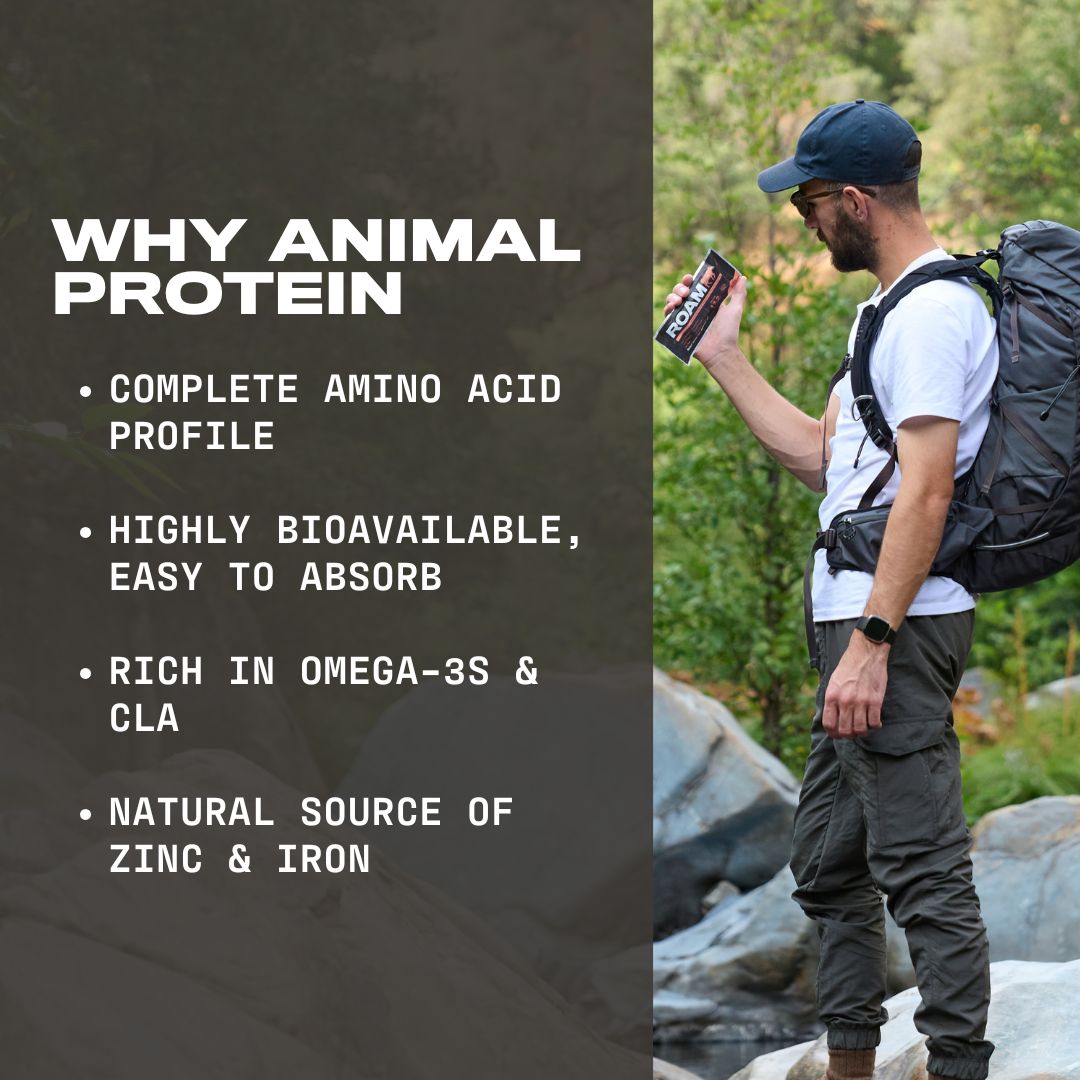
Natural Heme Iron: No blockers, no phytic acid, just the most absorbable form of iron on the planet.
Vitamin B12 & Zinc: Essential co-factors for energy metabolism that are naturally packaged alongside the iron in beef.
Zero 'Protein-Washing': We don't need to add synthetic vitamins because our ingredients are already nutrient-dense.
The Verdict: Quality Over Quantity
If you are a woman training at a high level, you cannot afford to ignore the quality of your minerals. This May, as the race season kicks off, audit your snack cupboard. Are you fueling with industrial isolates that block your progress, or are you fueling with the heme iron your body was designed to use?
Choose the matrix. Choose real food. Choose your best performance.